
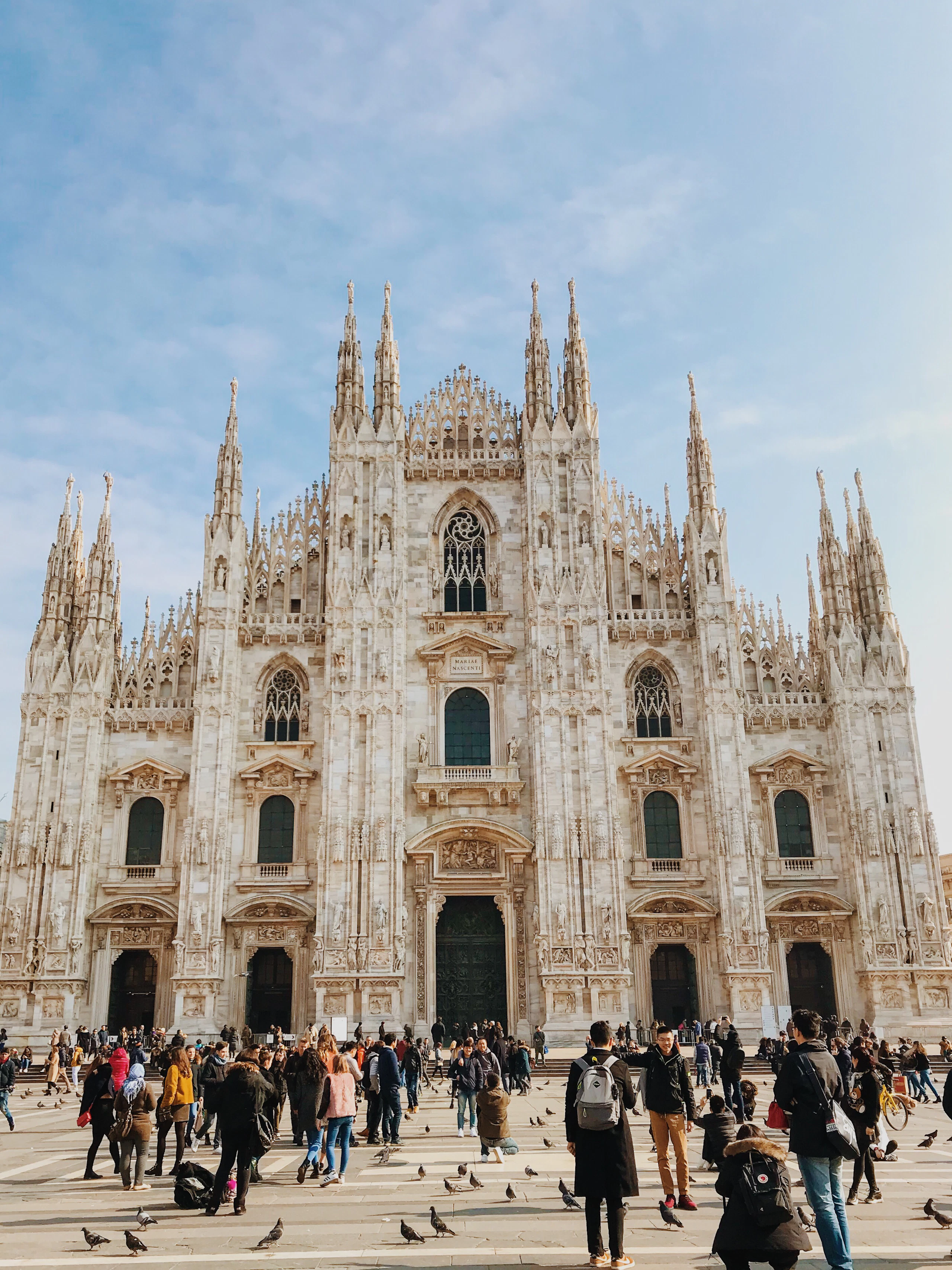
Entry requirements, vaccines & more...
Milan blends fashion, history and culture like few other cities. A little preparation goes a long way, so here are the practical basics to sort out before you go.
Entry requirements
Passport
Make sure your passport is valid for at least three months after the date you plan to leave the Schengen Area – six months is the safer rule, as some airlines check for it.
Visas
- EU, EEA and Swiss citizens: no visa needed – a valid ID card or passport is enough.
- Citizens of the UK, US, Canada, Australia and many other countries: no visa needed for tourist stays of up to 90 days in any 180-day period.
- Other nationalities: you may need a Schengen visa. Check with the Italian embassy or consulate in your country well before you travel.
EES and ETIAS
If you're from outside the EU, your fingerprints and photo are now registered at the border under the new Entry/Exit System (EES), so allow a little extra time at passport control. ETIAS, the online travel authorisation for visa-exempt visitors, is expected to launch in late 2026. Check the official EU website before you book.
Travel insurance
Good travel insurance gives you peace of mind if something goes wrong during your stay.
- If you're from the EU or EEA, the European Health Insurance Card (EHIC) covers necessary treatment in the Italian public health system. UK travellers can use the GHIC in the same way. Neither replaces proper insurance.
- We strongly recommend private travel insurance with full medical cover, repatriation, cancellation, and theft or loss of luggage.
- Read the terms of your policy before you leave.
Language
The official language is Italian. English is widely spoken in hotels and tourist areas, but a few basic words always go down well.
- Ciao (hello / goodbye)
- Grazie (thank you)
- Per favore (please)
- Scusi (excuse me / sorry)
Local etiquette tip
Locals really appreciate it when you make the effort. A simple "grazie" or "per favore" can open doors and make every interaction warmer.
Money
Italy uses the euro (€).
- Cash machines (Bancomat): easy to find all over Milan. Use those attached to major banks – they're safer and less likely to charge high fees.
- Cards: Visa and Mastercard are accepted almost everywhere – shops, restaurants, museums and hotels. American Express is less widely accepted.
- Cash: carry a little for small purchases, tips and smaller places that may not take cards.
Staying connected
Getting online in Milan is easy.
- eSIM: if your phone supports it, buy a data eSIM before you travel and you'll be online as soon as you land.
- Local SIM card: available from operators such as Vodafone, TIM and WindTre in their shops. You'll need your passport, and your phone must be unlocked.
- Wi-Fi: most hotels, cafés and restaurants – and many public spaces – offer free Wi-Fi.
Electricity
To keep your devices charged:
- Plug types: Italy uses types C, F (Schuko) and L.
- Voltage and frequency: 230 V, 50 Hz.
- Adapter: if your devices use a different plug, bring an adapter. If they don't support 230 V, you'll also need a voltage converter.
With all that sorted, you're ready to enjoy everything Milan has to offer.
AI planner
Ready to plan your trip to Milán?
Generate your custom itinerary in minutes.